Editor’s note: Discover the current COVID-19 news and assistance in Medscape’s Coronavirus Resource Center
.
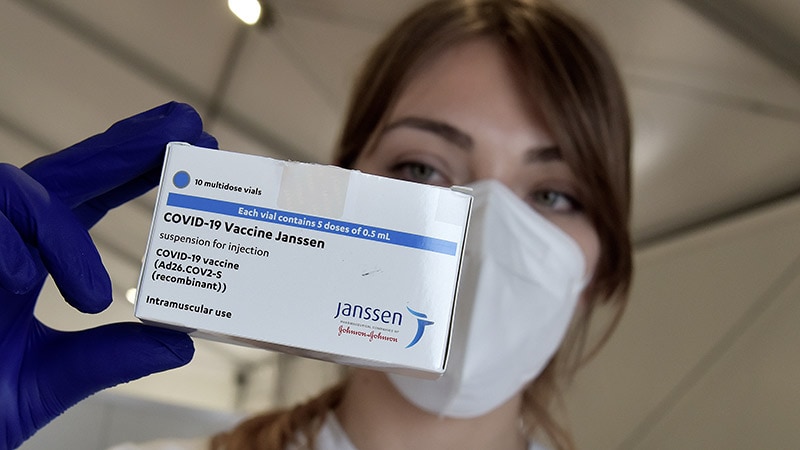
Usage of mRNA COVID-19 vaccines ought to be thought about as the more suitable choice in the United States instead of Johnson & Johnson’s (J&J) Janssen COVID-19 vaccine in females under the age of 50 years, according to one group of specialists.
The group makes their suggestion in an editorial in JAMA released online April 30, accompanying a paper explaining information of 12 case reports of cerebral venous sinus apoplexy(CVST) with thrombocytopenia following the J&J COVID-19 vaccine, likewise referred to as the Advertisement26 COV2.S vaccine.
The editorialists are Ruth A. Karron, MD, teacher of global health at Johns Hopkins Bloomberg School of Public Health in Baltimore, Maryland; Nigel S. Secret, MD, teacher of hematology at University of North Carolina at Chapel Hill; and Joshua M. Sharfstein, MD, associate dean for public health practice at Johns Hopkins Bloomberg School of Public Health.
They keep in mind that after a preliminary time out following reports of apoplexy with thrombocytopenia syndrome (TTS) connected to the J&J vaccine, and on the suggestion of the Advisory Committee on Immunization Practices, the United States has actually allowed making use of the J&J vaccine in all grownups with details on the danger of TTS contributed to academic products.
The editorialists explain that no cases of TTS have actually been validated following administration of more than 180 million dosages of the mRNA vaccines in the United States.
They state that while the J&J vaccine will still be required for people with allergic reactions to parts of the mRNA vaccines and for those who reside in remote areas where the cold chain for transportation and storage of mRNA vaccines can not be preserved, “United States public health firms and clinicians must think about suggesting mRNA vaccines as much safer choices for those who might be at significantly greater danger for TTS after Advertisement26 COV2.S vaccination, presently females more youthful than 50 years.”
In the primary JAMA paper, a group led by Isaac See, MD, Centers for Illness Control and Avoidance (CDC) COVID-19 Action Group, report complete information of 12 cases of CVST with thrombocytopenia following the J&J COVID-19 vaccine reported to the United States Vaccine Unfavorable Occasion Reporting System (VAERS).
The 12 United States case reports, 3 of which were deadly, reveal numerous resemblances to cases explained in Europe after the AstraZeneca vaccine.
The authors keep in mind that by April 12, around 7 million dosages of the J&J vaccine had actually been given up the United States. The 12 cases of CVST and thrombocytopenia following invoice of the vaccine were reported to VAERS in between March 2 and April21 All 12 cases remained in white females, 11 of whom were under 50 years of age.
Since April 25, an additional 2 cases have actually been verified and reported to VAERS; one in a male more youthful than 40 years, the other in a lady aged in between 40 and 59 years.
In the 12 cases reported in information, signs began in between 6 and 15 days post vaccination.
A minimum of 1 danger element for CVST was determined in 7 clients (weight problems in 6, hypothyroidism in 1, and usage of integrated contraceptive pills in 1). None of the clients was pregnant or within 12 weeks postpartum, had previous apoplexy, an individual or household history of thrombophilia, or recorded previous direct exposure to heparin
In addition to CVST, 7 clients had intracerebral hemorrhage and 8 had non-CVST thromboses.
One client reported a history of SARS-CoV-2 infection around 4 months prior to vaccination. Of the other 11 clients, 4 had unfavorable serologic tests and 7 were not evaluated.
All 12 clients were hospitalized and 10 were confessed to an extensive care system (ICU). At the time of the last follow-up, 3 clients had actually passed away (all of whom had intraparenchymal hemorrhage), 3 stayed in the ICU, 2 were still hospitalized however not in an ICU, and 4 had actually been released house.
The authors mention that the United States cases of CVST with thrombocytopenia following the J&J vaccine have numerous resemblances to those reported in Europe after the AstraZeneca vaccine, happening mostly in ladies more youthful than 40 years and in clients without detected thrombophilia. Both European and United States clients had an average platelet nadir count of 19 ×10 3/ µL and a number of likewise had non-CVST large-vessel apoplexy.
In the European cases of CVST with thrombocytopenia, 50%of clients passed away, compared to 25%of United States clients.
Like the European cases, the United States cases had favorable heparin-PF4 HIT antibody ELISA tests in the lack of previous direct exposure to heparin, as would be seen in autoimmune HIT.
Nevertheless, in the preliminary European CVST reports, 88%of clients evaluated with practical platelet HIT antibody tests had favorable outcomes, compared to just 11%of the United States cases. The authors keep in mind that absence of standardization in practical platelet HIT antibody assays might lead to distinctions in outcomes by various labs.
” It might be very important to alert screening labs that post-vaccination TTS is being examined, so that screening techniques can be changed if required,” they state.
They conclude that these case reports recommend that the pathogenesis of TTS might resemble autoimmune HIT, activated by the development of antibodies directed versus PF4, a constituent of platelet alpha granules launched throughout platelet activation. In contrast to timeless HIT in which exogenous heparin activates antibody development, in autoimmune HIT, an endogenous polyanion activates PF4 antibody development.
They keep in mind that the exact system of TTS in relation to COVID-19 vaccination has actually not yet been developed. The International Advisory Committee on Vaccine Security has actually specified that a platform-specific system associated to adenovirus vector vaccines can not be left out. Both the J&J and AstraZeneca vaccines utilize an adenoviral vector, however they are various; J&J utilizes a human vector, while AstraZeneca utilizes a chimpanzee vector.
They likewise mention that CVST and thrombocytopenia following SARS-CoV-2 infection has actually been reported in a minimum of 2 cases, however HIT screening was refrained from doing in these cases. There have not up until now been any reports to VAERS of CVST with thrombocytopenia following mRNA COVID-19 vaccines.
The authors state these findings have crucial scientific and public health ramifications, keeping in mind that the CDC has actually upgraded its interim scientific factors to consider for usage of licensed COVID-19 vaccines to show that ladies aged 18 to 49 years must know the increased threat of TTS after invoice of the J&J vaccine, and to utilize a nonheparin anticoagulant in believed cases.
They keep in mind that a subacute discussion of headache exists in 90%of clients with common CVST. While headache is a typical sign after the J&J vaccination, many headaches start and fix within 2 days. Whereas in the United States cases of CVST after vaccination, headache signs started a minimum of 6 days after vaccination and continued for a minimum of a week for the majority of.
” Immediate assessment with a neurologist is sensible when a client is presumed or verified to have CVST. In addition, because the average time from sign start to hospitalization was 7 days in the United States CVST case series, client and clinician education may reduce the time to scientific assessment and for that reason treatment,” they specify.
The authors likewise keep in mind that VAERS is a passive security system, so cases of CVST with thrombocytopenia might be underreported.
In their accompanying editorial, Karron et al explain that in addition to the 12 clients with CVST with thrombocytopenia explained in this case series, a minimum of 3 clients without CVST however conference diagnostic requirements for TTS have actually been reported to VAERS (since April 21), all in females aged 18 to 59 years (typical age, 37 years).
The editorialists report that the rate of CVST with thrombocytopenia after the J&J vaccine is around 5 per million ladies aged 18 to 50 years. This is compared to a background rate of roughly 0.05 to 0.13 per million each month.
They state that the schedule of an interim standardized case meaning of this unfavorable impact will help with potential case ascertainment through evaluation of big connected databases and active case finding.
This will likewise allow higher understanding of whether people who are otherwise at increased danger for hypercoagulation in basic and for CVST in specific (for instance, females taking hormone contraceptive medications or who are pregnant) are likewise at increased danger for TTS.
Getting this info will support vibrant country-specific evaluations of the dangers of each vaccine compared to the threat of COVID-19 illness for their populations and subpopulations, they include.
JAMA. Released online April 30,2021 Complete text, Editorial
.
For more Medscape Neurology news, join us on Facebook and Twitter
.


No comments:
Post a Comment