
During the height of the pandemic, a peaceful financial crisis was brewing for ambulance business
As medical facilities became overloaded and patients pled not to be required to crowded emergency clinic for worry of prospective infection, paramedics and lifesaver began treating patients where they met them– outside homes, along with roadways, in parking area.
The trouble is that ambulance business are only paid to transport people, not for treating them.
Now, a help plan in the American Rescue Strategy and a brand-new federal healthcare program could supply a financial lifeline for ambulance companies and declare a permanent shift in emergency medication as a whole.
The attempt to repay ambulance companies started with a costs introduced by Sens. Catherine Cortez Masto, D-Nev., and Costs Cassidy, R-La., but the legislation was eventually rolled into the $1.9 trillion Covid relief expense. Cortez Masto elected the strategy, and Cassidy did not.
” Our very first responders have gone above and beyond in caring for patients throughout the pandemic, and it’s simply wrong that ambulance business weren’t earning money unless they took clients to the health center,” Cortez Masto stated.
That piece of legislation might result in hundreds of millions of dollars of relief, depending upon the choice made by Xavier Becerra, whom the Senate verified Thursday as health and human services secretary.
Supporters for ambulance companies have negotiated with Congress for almost a year to get this aid.
” It ended up being a genuine problem for some services to keep the doors open and have the PPE and provide the services that their own staff members required,” Kathy Lester, a lobbyist for the American Ambulance Association, stated, describing personal protective equipment. “Finally all of the stars aligned, and we were able to find this opportunity in the American Rescue Plan.”
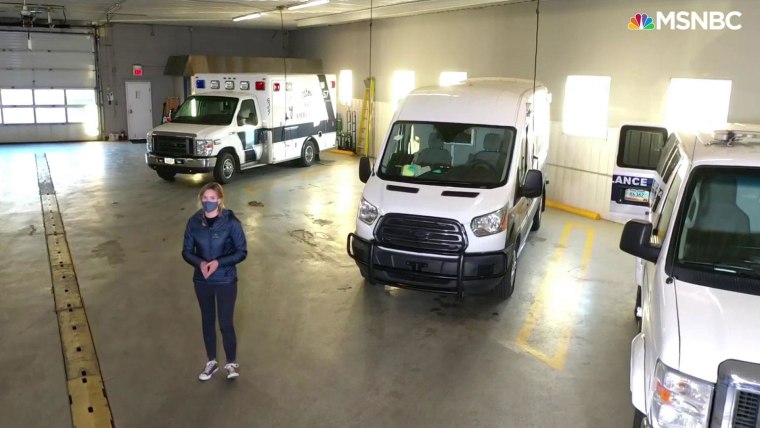
Empress EMS in New Rochelle, New York City, experienced much of this early in the pandemic, treating thousands without reimbursement. The state’s treatment protocol basically informed ambulance business to prevent taking clients to the healthcare facility unless absolutely necessary.
Some ambulance services, like Empress EMS, said they had seen 30-40 percent of their emergency call volume shift to these treatment-in-place responses, according to the American Ambulance Association. In general, there was a 12 percent increase nationwide, which has actually meant a substantial financial problem for ambulance business.
” We did that at our own cost since it was the ideal thing to do,” Hanan Cohen, Empress EMS business director, said. “We end up doing a number of thousand treatments in place during the peak Covid period of March, April and Might with no revenue versus it.”
‘ Huge steps forward’
The Centers for Medicare and Medicaid Providers started an experimental program that wouldn’t rather standardize treatment-in-place, however it would offer ambulance business and patients more alternatives prior to taking a pricey journey to the emergency clinic. Postponed by the pandemic, the new program begun in January with 205 ambulance services getting involved.
Called the Emergency Situation Triage, Treat and Transport model, the Medicare program is a five-year pilot in 36 states and Washington, D.C., that would enable ambulance business to carry patients to their primary care physician or an immediate care clinic in an attempt to decrease the concern and the expenses of the emergency clinic The paramedics or EMTs at the scene of a mishap or a health emergency can also supply treatment alongside a medical professional hiring through telehealth.
” It’s a high value service that overall reduces what insurer need to spend, decreases the client’s copays and deductibles,” Cohen stated, “which’s all value to the health care system by reducing expenses.”
The Regional Emergency Medical Solutions Authority, also called Remsa, in Reno, Nevada, acted as the guinea pig for this type of program start in2011 With a $10 million grant, it broadened services to include at home treatment and care, a nurse health line patients might call for medical guidance, and clients might be required to their primary care physicians or immediate care clinics.
Over four years, they reported more than $9 million in cost savings for their neighborhood by reducing the variety of emergency room transfers necessary.
” You’re sending out individuals the most expensive resource that has to be prepared 24 hours a day, and 30 percent of the clients we respond to every day need either first aid or less than first-aid level care,” said Adam Heinz, Remsa’s director of integrated health. “So, for us, the question was how do we protect resources for emergency situations when the kid is choking, when grandma has a cardiac arrest, when someone is drowning, and be able to provide a fast reaction and experienced and clinically skilled individuals while also filling the space of being a safety net?”
Members of the ambulance neighborhood said it is a hard-won lesson illustrated through the pandemic and a possible silver lining after a year of healthcare troubles. At this point, numerous stated they are cautiously optimistic, but they are also waiting to see what personal insurer decide to do.
The worry is that memory may become short-term.
” These are enormous steps forward, and we hope they remain in location over time,” said Remsa CEO Dean Dow. “We can’t just keep burying our heads in the sand and declining to make the tough decisions to alter. That’s not the path we can afford to decrease.”


No comments:
Post a Comment