Among the most significant shocks was that the U.S. fared even worse than a lot of other countries, with more than29 million cases and nearly 530,000 deaths as of this writing.
Downplaying the danger and sidelining professionals. Trump dismissed it as no worse than the flu and said the pandemic would be over by Easter.
” Something that shouldn’t have actually been done is people minimizing the infection,” Perlman says. “That was a real huge issue, since if you let the pandemic leave control and do not take it seriously, it gets worse.” The U.S. Centers for Disease Control and Avoidance initially informed the media that the danger to the American public was low. When a CDC representative acknowledged in late February that interruptions to daily life might be “serious,” the company was quickly sidelined– and Trump himself became the federal government’s primary channel for COVID updates through his day-to-day briefings. “The Trump administration actually securely managed what [the CDC] could put out,” states Angela Rasmussen, a virologist at the Georgetown University Center for Global Health Science and Security. This muzzling of the CDC and top government health professionals made it hard for them to interact accurate and lifesaving scientific info to the public. Under President Joe Biden’s administration, government science companies and health authorities have been given renewed regard and independence. But restoring public rely on these authorities will still take time.
Slow and flawed screening. The CDC developed its own test for the virus rather than employing a German-developed one utilized by the World Health Company The Food and Drug Administration was sluggish to authorize tests made by personal business, states Caitlin Rivers, an epidemiologist at the Johns Hopkins Center for Health Security.
Evaluating accessibility has improved but stays uneven. Some professionals have argued for the use of prevalent quick antigen testing, a type that is cheap, does not require sophisticated laboratory processing and might be done in your homes, schools or workplaces. But some researchers still have issues about the precision of these tests, and the FDA has actually been slow to authorize them
Inadequate tracing, separating and quarantines. The timeworn methods of fighting a contagious disease– testing people who may be sick, tracing their contacts, and isolating or quarantining those who are positive or exposed– worked for COVID. The WHO repeatedly stressed the significance of these steps, and nations that followed this recommendations carefully (such as Vietnam, Thailand, New Zealand and South Korea) was successful in controlling their break outs. In addition to its test issues, the U.S. did not do a sufficient task of separating those who were understood or believed to be contaminated (or had actually just recently traveled to a high-risk location), tracing their contacts or needing quarantines for those who were exposed. China imposed exceptionally stringent, city-wide quarantines. Other countries required those who might have been exposed to remain at a government-approved hotel or other center for a quarantine ranging from a few days to a couple of weeks. Such policies would likely have actually been harder to implement in the U.S., a nation that prides itself on personal liberties. Not doing so came at the expense of keeping the infection in check.
Complicated mask guidance. Although face masks are now commonly considered a vital part of stopping transmission, U.S. and international health authorities were sluggish to advise them for public use. Lots of countries in East and Southeast Asia, consisting of China and Japan, had actually normalized mask using well before the pandemic– in part since of the SARS break out in 2002–2003 Unlike the SARS virus, nevertheless, scientists now understand that SARS-CoV-2 often spreads out prior to a provider develops signs (and possibly even if they never do). In the early weeks and months of the COVID outbreak, the CDC and WHO mentioned that face masks were not needed for the public unless a person was experiencing signs or taking care of somebody who was. The agencies also initially urged people not to buy high-filtration N95 and surgical masks since they were required for healthcare workers and were in brief supply due to the fact that of inadequate federal government stockpiles. Though perhaps well-meaning, the WHO’s and CDC’s guidances sent out a mixed message about masks’ efficiency– and about who is worthy of security. The CDC altered course and recommended cloth face coverings in April The WHO did refrain from doing so up until June, mentioning inadequate proof of their effectiveness prior to then. The CDC did not react to an ask for comment, and the WHO referred Scientific American to push briefings that attended to these concerns. In these instructions, specialists pointed to an absence of premium proof for mask usage. The WHO’s director general likewise specified that, in the lack of other public health procedures, “masks alone will not safeguard you from COVID-19”
Even after health professionals reached a consensus that masks worked, Trump declined to set an example by wearing one in public. Instead he buffooned individuals who wore them, and numerous of his advocates declined masks. “I don’t think it must ever end up being a political issue,” Rivers says. “It’s a straightforward public health intervention.” A study in Nature Medication published online in October estimated that universal mask using could have saved nearly 130,000 lives during the fall and winter season of 2020–2021 A lot of states did ultimately institute mask requirements, and Biden has actually made them mandatory in federal government buildings and on interstate transit. Yet several states, such as Texas and Mississippi, have actually simply eliminated mask requireds and other constraints totally. “We have actually seen this take place over and over once again: Where the virus chooses back up, they carry out more restrictions in different states and regions. It decreases a bit, and then they simply open back up again rather than stating, ‘Hey, you understand, possibly this ended up being a substantial issue in the very first location since we opened back up,'” Rasmussen says. “We haven’t appeared to learn from our errors.”
Early in the pandemic, U.S. health authorities believed the infection spread mainly by direct contact or relatively large beads from a nearby cough or sneeze– not by far smaller droplets, called aerosols, that linger in the air. The latter– which critics have dubbed “hygiene theater”— continues to be a focus of many offices and companies.
Structural racism sustained health injustices. The pandemic exposed and worsened deep-rooted racial and economic injustices in health and health care.
Decentralized response. “And we simply have uneven applications of public health suggestions in a method that I can’t think of any other country does.
What Went Well
Regardless of the lots of errors and bad policy choices in the U.S. action, there were some unbelievable success stories, too.
Vaccines. Less than a year after the virus was genetically sequenced, two vaccines– one made by Pfizer and BioNTech and another established by Moderna– were found to have approximately 95 percent effectiveness in avoiding symptomatic COVID and were licensed for emergency use in the U.S.
However the exceptional success in creating vaccines is tempered by the truth that most of the world still does not have access to them. And early rollout efforts in the U.S. had a sluggish and stumbling start, mostly due to the fact that the federal government did not offer states with the resources for distributing the vaccines. Further, Black and Hispanic individuals are being immunized at far lower rates than white individuals. And more work is needed to get rid of vaccine hesitancy in some populations, including Republican citizens. The pace of vaccinations is picking up, and Biden has said the nation is on track to have enough vaccine dosages for every U.S. adult by the end of May, sustaining guarantee of a return to some normality in the coming months.
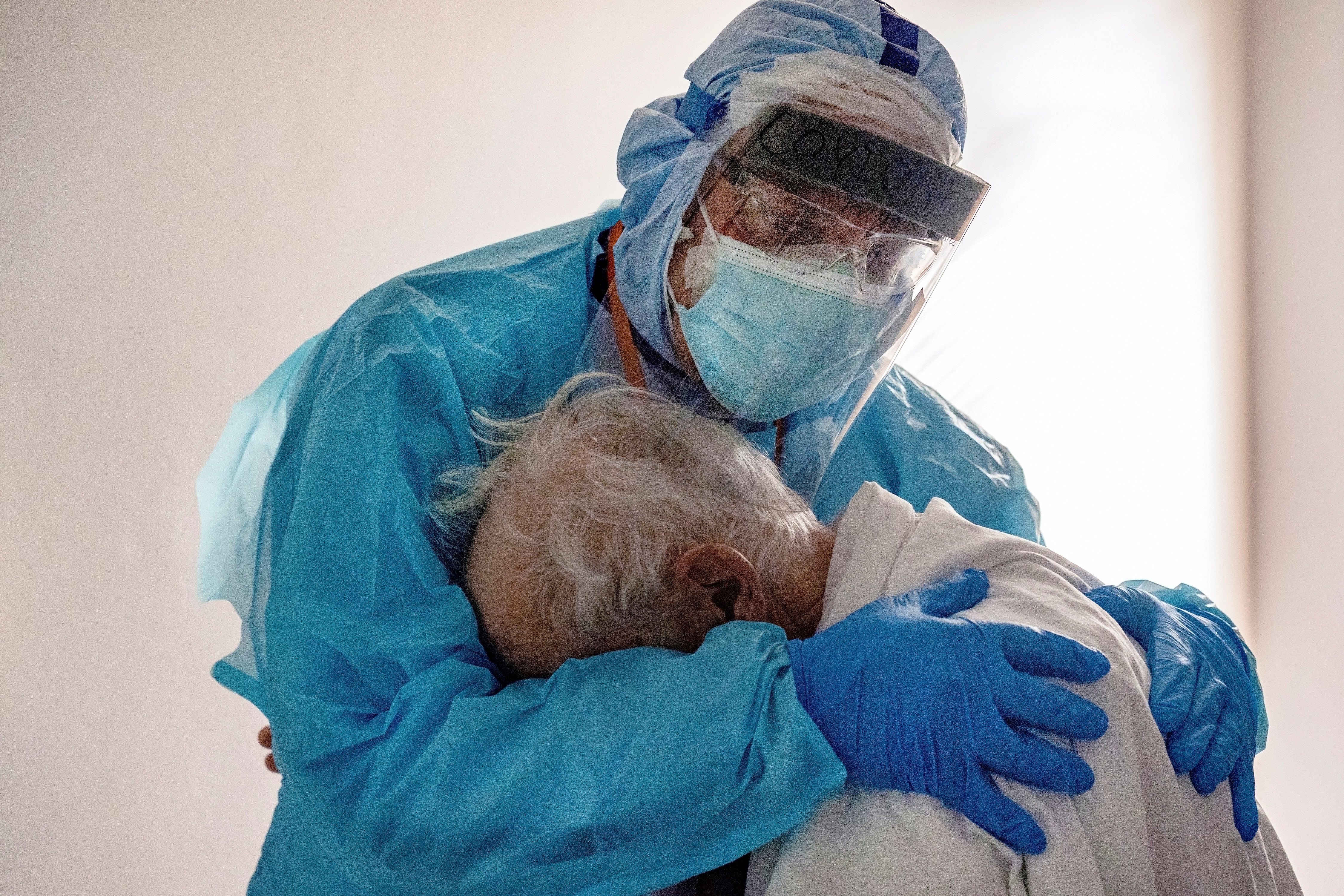
Brave efforts of health care workers. Faced with unmatched levels of illness and death, health care workers stepped up and risked their lives to care for COVID patients. Nurses, aides and orderlies cared for the senior and most vulnerable individuals as the virus damaged nursing houses
The general public (mainly) did its part. Despite COVID becoming a part of the nation’s bitter and escalating political divide, numerous Americans followed public health assistance concerning mask using, social distancing and preventing unnecessary threats. Surveys reveal the majority of people wear masks when they head out, Johns Hopkins’s Rivers says.” I am actually heartened by the sense of function– the willingness for the whole nation to come together and alter their lives and safeguard themselves and their communities,” she says.
Combatting misinformation. In a media environment where false information and disinformation can reach millions through a single tweet, sorting out the signal from the sound has been a huge obstacle. But for one of the most part, science journalists faced the informative chaos with clear, evidence-based reporting. When Trump made unsupported claims about security levels or mask wearing or suspicious COVID “treatments,” journalists and high-profile scientists such as Anthony Fauci quickly set the record directly. However as conspiracy theorists continue to circulate misinformation about the disease and vaccines, it is more important than ever that media outlets stay on guard.
Remaining Concerns
As the world passes this one-year milestone in the pandemic, lots of unknowns stay.
What will occur with the new variants? Numerous novel strains of SARS-CoV-2 have actually emerged that might threaten development against the disease. A variant called B. 1.1.7, first determined in the U.K., is deadlier and more transmissible than the initial– and it is on track to become the dominant variation in the U.S. this spring. Another variation that was initially identified in South Africa, called B. 1.351, has mutations that appear to assist it to a minimum of partially avert a few of the vaccines. A 3rd variant that was initially seen in Brazil, called P. 1, has actually overrun parts of that country and likewise includes worrisome mutations. Currently these variations remain in a race with the vaccines, and scientists hope enough people can be vaccinated rapidly enough to outmaneuver the new stress. Some vaccine makers are already dealing with booster shots, must they be necessary.
How long will immunity last? The period of resistance to COVID– whether from natural infection or vaccination– stays unidentified. A large study showed that people who had recuperated from infection still had antibodies, along with so-called memory B cells and memory T cells, six to eight months later A number of reinfections have occurred with some of the new variants. The CDC recently released guidelines stating that, with a couple of exceptions, completely immunized individuals who are exposed to the virus do not require to quarantine if they do disappoint symptoms. Time will tell whether vaccination provides immunity that lasts months or years and if booster shots will be required.
Why do some individuals become COVID “long haulers”? But the illness’s real effect on people’s lives might not be understood for years.
What is the future of SARS-CoV-2? Most researchers believe it will never ever go away totally however could become less typical and milder as more individuals are immunized versus it– or as they develop up some resistance through natural infection.
Learn More about the coronavirus outbreak from Scientific American here And check out coverage from our worldwide network of publications here


No comments:
Post a Comment