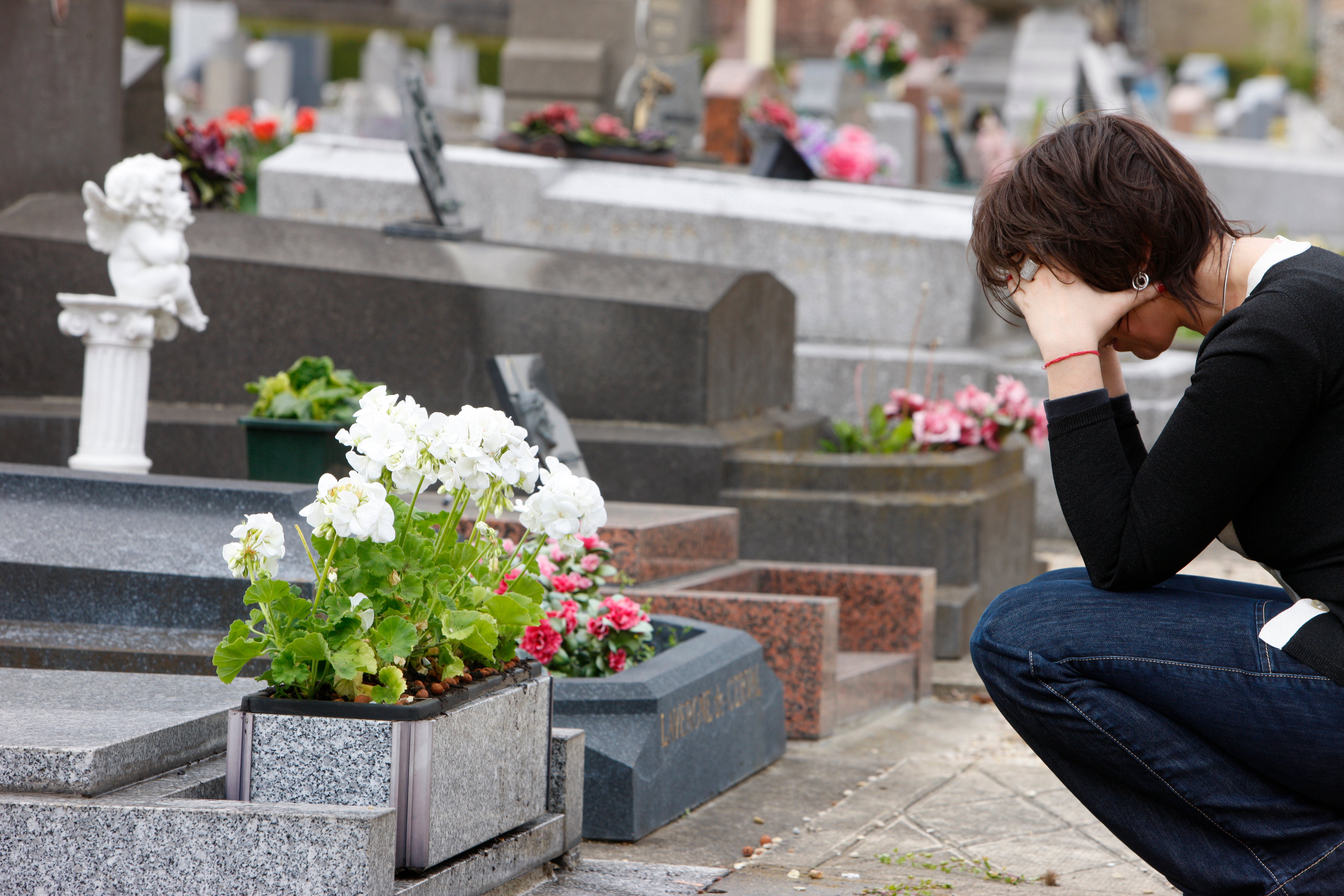
The variety of individuals with extended sorrow in the future and beyond might be significant. A July2020 research studyreleased in theProcedures of the National Academy of Sciences U.S.A. approximated that each U.S. COVID death leaves, usually, roughly 9 close family members dispossessed. If 5 to10 percent of the bereaved group establishes this condition– which is the basic rate under regular situations– this might put the frequency of extended sorrow at an extra quarter of a million to half a million cases in the coming year. Other information hint the toll might be much greater. A March 2021 survey from the Associated Press– NORC (AP-NORC) Center for Public Affairs Research study discovered that about 20 percent of individuals surveyed in the U.S. had actually lost a relative or friend to COVID. That implies a possible bereaved population of about 65 million, and it might press varieties of brand-new extended sorrow cases into the millions.
Due to the fact that COVID deaths have actually disproportionately happened amongst low-income neighborhoods and individuals of color, extended sorrow will likely have an outsized result on those populations, Shear and other therapists state. What is specifically uneasy is that these neighborhoods, and the U.S. in basic, do not have enough psychological health resources– therapists and centers– to resolve an issue of this magnitude. “If we do not discover methods to accentuate the psychological suffering that individuals are managing today, it will become more major issues,” states Vickie Mays, a teacher of health policy and management at the University of California, Los Angeles, Fielding School of Public Health.
A Wound That Time Will Not Recover
Sorrow can be awful. Many people, nevertheless, ultimately incorporate their loss and discover a method forward, even as they continue to grieve their enjoyed ones. Mary-Frances O’Connor, a medical psychologist at the University of Arizona concentrating on sorrow and its physiological effects, likens this procedure to recovery a damaged leg: For most of individuals, rest and a cast will permit it to go back to regular. For a subset, an issue will develop– an infection or secondary injury to the location– that avoids it from recovery effectively without more extensive intervention. In bereavement, those are individuals with extended sorrow.
O’Connor explains one client she dealt with who lost her task since she might not make it through basic work discussions without breaking down in tears for months on end. Another client felt it would be useless to have spiritual events for her kids after losing her mom. “These kinds of issues truly do effect day-to-day operating for individuals,” O’Connor states.
The health ramifications of the condition can be severe. It can worsen suicidality and compound abuse It is likewise connected to systemic damage to the body. O’Connor discovered that individuals experiencing sorrow have greater levels of swelling, especially the cytokine interleukin-6, which has actually been connected to increased danger of heart disease and higher vulnerability to infections. O’Connor keeps in mind that long-lasting mental and social distress results in a damaging “weathering” in the body, a reputable state of extended biological tension that inclines individuals to higher illness danger and earlier health decrease.
There are currently indications that the pandemic is developing greater levels of major mourning conditions, states psychologist Robert Neimeyer, director of the Portland Institute for Loss and Shift in Oregon and an author of a number of books on sorrow treatment. He sees “uneasy signals” that there will be a greater occurrence of extended sorrow. Research study released previously this year in the journal Globalization and Health discovered indications of extended sorrow in almost 38 percent of pandemic-bereaved people from China. That number is more than triple the common rate, Neimeyer notes.
Scientists state there are lots of elements of the pandemic that are most likely to increase the danger of the condition. One cause might be the scenarios surrounding most COVID deaths. “There’s a great deal of injury related to [a coronavirus] loss,” Shear states. Whether these deaths take place in a health center or in the house, individuals are having a hard time to breathe, and the client is normally separated due to the fact that of infection issues. “It’s taking place type of arbitrarily and rapidly and significantly, and individuals are suffering a good deal,” she includes. “They’re not tranquil deaths by any methods. And they’re likewise happening alone.”
The absence of contact with a liked one prior to or throughout death can contribute to the probability the dispossessed will ponder on alternative results, avoiding them from accepting the truth of the loss. O’Connor states that loved ones typically question, “‘ What if I had done this? What if the medical professional had done that?’ There are a limitless variety of things that might have taken place, which rumination procedure appears to obstruct of going back to a significant life.” Previous research study has actually discovered that significant interaction with an enjoyed one prior to their death lowers the danger of survivors establishing consistent problems with sorrow later. This frequently has actually not been possible in individual, or at all, with those who passed away from COVID.
Another contributing element for individuals who lost liked ones throughout the pandemic– from COVID or another cause– might be the previous year of public health steps that restricted events, travel and close social contact. These procedures have actually shown vital for managing the spread of SARS-CoV-2, and the death and hospitalization numbers would be much greater without them, “sorrow is made complex by taking away so numerous of the standard methods you would grieve,” Mays states. A memorial over Zoom is “a far cry from having the ability to actually come together with others and experience the alleviation of a human hug,” Neimeyer states. The constraints likewise lowered individuals’s capability to develop brand-new experiences and social connections after a loss, a crucial action in accustoming, Shear notes. The pandemic has actually increased the occurrence of state of mind and stress and anxiety conditions and compound abuse, all of which put individuals at higher threat for extended sorrow condition.
Other pandemic tensions– from monetary issues to health and wellness issues– can make adjusting to a loss harder due to the fact that they sidetrack individuals from processing it, Shear notes. This is most likely impacting an out of proportion portion of individuals in neighborhoods struck hardest by the pandemic. Some have actually lost more than one enjoyed one, some have actually lost a task and/or house, and numerous have actually been strained with considerable monetary stress leading to food or real estate insecurity. “When you have a great deal of unpredictability, that makes it harder to go through a mourning procedure,” Mays states.
Treatment Expenses
There work, science-backed treatments for extended sorrow, however they include months of treatment. Specialists in Europe, for instance, deal with the condition with more than 2 months of group and private treatment sessions to deal with clients’ habits and actions. Shear’s group at Columbia has actually established a 16- week individually treatment procedure, verified through research study, that concentrates on adjusting to loss.
Using such extensive interventions in traditionally marginalized neighborhoods, with less monetary and health resources and yet more danger, is challenging, Shear notes. In a little research study, her group discovered its treatment program was similarly reliable amongst white and Black Americans. The number of individuals of color who might be suffering from extended sorrow will likely be high due to the fact that of the out of proportion effect of COVID on their neighborhoods. The AP-NORC survey about losses discovered that while about 15 percent of white participants had actually lost somebody near them to COVID, that portion doubled for Black and Latino people.
Access to psychological healthcare in the U.S. is doing not have, with roughly 30 psychologists and less than 16 psychiatrists per 100,000 individuals. That ratio is a lot more uneven in neighborhoods that have actually suffered the most throughout the pandemic. “It looks a lot more abysmal,” Shear states, and it’s another element of systemic bigotry in healthcare in the U.S. According to Shear, lots of therapists are not knowledgeable about extended sorrow condition, since psychological health specialists in basic get little to no training in dealing with even common sorrow.
There are less extensive techniques that can supply some aid, Mays states. For beginners, she promotes for a safe go back to routines, neighborhood assistance, and common celebration and discussions around pandemic losses. “I’m not huge on thinking that we require individuals to be in individually psychological health services,” she states. O’Connor includes that if we can likewise much better minimize a few of the secondary stress factors many individuals are dealing with– absence of food, for example– they will be much better geared up to recuperate from loss. “For an individual who has enough real estate and food security and child care, now all of a sudden you have the bandwidth to comprehend what it indicates that you lost your mama,” she states.
As the U.S. works its escape of the instant viral danger, Neimeyer highlights that the requirement for options to this shadow psychological health breakdown is growing. “This pandemic of sorrow is one for which there is no vaccine,” he states.
IF YOU REQUIRED ASSISTANCE
If you or somebody you understand is having a hard time or having ideas of suicide, aid is offered. Call the National Suicide Avoidance Lifeline at 1-800-273-8255(TALK), utilize the online Lifeline Chat or call the Crisis Text Line by texting TALK WITH 741741.


No comments:
Post a Comment