The cognitive harshness is difficult to handle. On the one hand, new Covid cases in the United States are decreasing as vaccinations rise. An immunized summer gleams on the horizon. Worldwide, we are at the highest number of new Covid-19 infections ever recorded, the World Health Company cautioned last week. And it’s just a matter of time prior to versions from other outbreaks make their way here.
India is now being ravaged by a near-vertical rise in cases and deaths. Officials and specialists fear a new variant that might be both more transmissible and deadlier might be driving it. But it’s almost difficult to tell, for an extremely basic reason: India is presently sequencing less than 1 percent of its Covid cases.
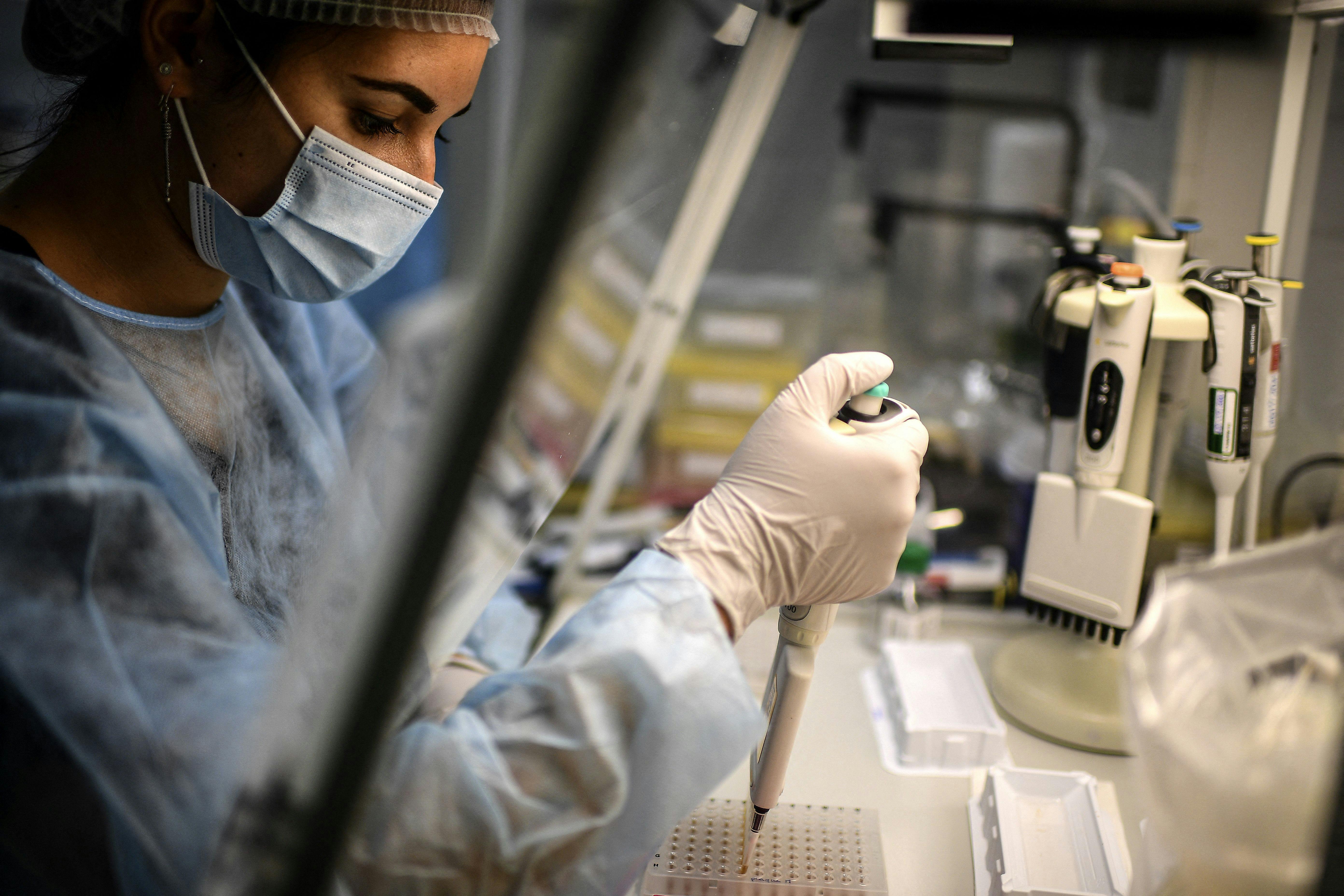
Regardless of the step of security vaccines have currently brought lots of locals of richer nations, they aren’t everywhere yet, and they’re not a final fix. Genomic sequencing and monitoring are now a critical frontier in the worldwide fight: A random tasting of tests can assist us find which variants are distributing or emerging, while more extensive sequencing requires to be released to hot spots. It’s not just about finding variants, Dr. Adam Lauring, associate professor of microbiology and immunology at the University of Michigan Medical School, informed me. “It’s also understanding when a variation is concerning.” And a big part of the concern, he stated, is “how variations associate with vaccination.” We require to understand if an alternative establishes that can overcome present vaccines so we can control outbreaks and examine the requirement for vaccine boosters.
In July 2020, the National Academies of Science, Engineering, and Medication released a thorough report on the pressing requirement for genomic surveillance, however the warning mainly went unheeded– or, a minimum of, unfunded– for months.
Then, in late December, the world got a wake-up call: Covid-19 was progressing much faster than researchers thought possible– and some of those mutations made it more infectious. “Everyone was shocked,” Dr. Pavitra Roychoudhury, a trainer at the University of Washington’s department of laboratory medicine and pathology and a research study partner in transmittable diseases at Fred Hutchinson Cancer Proving ground, informed me. “Plainly, this has actually shown that it’s possible for the infection to pick up a great deal of mutations that make it more transmissible.”
In the ensuing months, the U.S. government promised billions for genomic sequencing and security, and researchers quickly increased the variety of positive tests scrutinized for variations. Those efforts are still not enough to catch emerging variations, professionals say. And we’re already falling behind, because we need not just to be monitoring versions across the nation– we likewise require to be looking in specific at the ones that may make vaccines less efficient.
The vaccines we have supply exceptional defense versus existing variants, however as global cases of Covid reach a record high, especially in populated nations like India and Brazil, the infection has countless opportunities to mutate. The Biden administration announced on Monday that it would deploy a “ strike group” to assist India conduct viral monitoring, to name a few goals. That sort of reaction, nevertheless, requires to start happening much faster, requires to become a matter of routine, and requires to be integrated into a wider system.
Our existing virus sequencing and surveillance system, like our health care system, is deeply fractured, specialists say. Today, positive Covid cases are usually sequenced by scientists, personal services, and state and regional health departments. These samples are often shared with the U.S. Centers for Disease Control and Avoidance and in a global database called GISAID, which is a kind of “information commons” for anyone thinking about sequencing, Lauring informed me. The CDC’s Advanced Molecular Detection workplace (which did not return ask for remark) works with state, local, scholastic, and industrial labs, such as Mission Diagnostics, to pull together a photo of viral changes throughout the nation. Beyond this workplace, there appears to be no nationwide entity for collaborating efforts to series and manage sequencing. Some of the flaws in this method can be seen in this map of sequenced cases Washington state, for example, is now sequencing about one in 10 favorable Covid cases, while Oklahoma has actually only sequenced about one in 1,000
” There’s some parts of the country that are relatively largely covered in terms of genomic sequencing, and there are still some sort of dark spots on the map,” Dr. Bronwyn MacInnis, director of pathogen genomic security in the transmittable disease and microbiome program at the Broad Institute of MIT and Harvard, informed me. “Focal sequencing– having the ability to be active and responsive where there could be epidemiological red flags” might help stem outbreaks before they aggravate, she said.
” I think genomic monitoring for respiratory pathogens must become a regular activity for public health entities,” Roychoudhury said. Preferably, these efforts would be centrally coordinated and moneyed, however the sequencing itself might be done by any public health labs or academic or business laboratories. It’s not almost sequencing the virus; it’s likewise about sharing what researchers discover nationally and worldwide, she stated.
A nationwide effort would direct resources toward locations where sequencing has lagged, especially in locations where the virus continues to surge. Creating a unified, coordinated strategy to increase security throughout the country– and the world– will help us find and react to variations as quickly as possible. And a national method for identifying and tracking variations would also assist us monitor future virus outbreaks– especially those posing pandemic hazards, like the flu. This pandemic, and the vast sums now being designated to sequencing, might be a chance to establish such a system, rather than playing variant whack-a-mole with disjointed sequencing efforts.
Holding all else equal, virologists would expect the infection to pick up an anomaly or two monthly. But B. 1.1.7, the alternative first discovered in the United Kingdom, had at least 17 unique mutations before it was identified, something enabled by the a great deal of infections. “I believe we were just a bit incorrect on that one,” MacInnis told me. “That, I believe, comes from not truly comprehending the enemy, partially since the opponent was still pretty new to us, and not having the international genomic monitoring capacity truly in location.”
” That’s when people sat up and began to notice that, Oh, my gosh, we are really lagging behind, we have no concept what’s spreading, since the portion of favorable cases sequenced is so low,” Roychoudhury said. “Ever since, I believe the spotlight has actually really moved from testing to sequencing.”
When the alarm on B. 1.1.7 first sounded, just about 51,000 of the 17 million cases verified in the U.S. had actually been sequenced. In January, the U.S. ranked forty-third around the world for genomic sequencing, stated Jeff Zients, the White Home’s coronavirus response organizer. The U.S. has actually rushed to catch up. On April 16, the Biden administration revealed $ 1.7 billion in funding for genomic sequencing of the infection. In the meantime, the U.S. is now sequencing a little bit more than 1 percent of its favorable Covid tests, compared to about 0.3 percent at the start of the year.
But it’s still a far cry from what’s needed. Scientific modelers quote that randomly sequencing about 5 percent of positive Covid cases must be able to catch existing and emerging variants. Getting closer to 10 percent, as the U.K. does, would guarantee that we have an even better handle on the variant photo. And in places where cases take off unexpectedly, researchers state, sequencing closer to 20 percent of cases is most likely a good idea to comprehend the potential function of variations.
There’s a function for all kinds of sequencing, in both public and private labs, Lauring told me. A national effort would assist determine the states that have more capability for sequencing to assist the states that don’t. “Not taking away from places that are currently doing a lot, however determining a method to get resources or to catch samples from states that might not be sequencing as much,” Lauring stated. And the same holds true worldwide, particularly in countries that have not had the ability to series much of their cases.
Beyond random tasting, it is very important to perform genomic surveillance on any cases of immunized individuals catching the disease Checking favorable for Covid even when you have actually been fully immunized is extremely uncommon. More than 87 million people in the U.S. are completely immunized, and only 7,157 advancement infections have actually been reported– a number of them asymptomatic or mild. The vaccines we have now are amazingly good at safeguarding us versus the virus. And every infection a vaccine prevents is one less possibility for the infection to mutate.
But “exist holes in the protection that vaccines offer?” Lauring asked. “Exist specific versions that are better at leaving vaccine resistance?” Examining these uncommon advancement cases is the way to discover. If a variant becomes very good at contaminating immunized people, it could then distribute amongst unvaccinated people and continue acquiring mutations. But if everyone were immunized, such a version would have a lot more trouble taking off. Security can also assist identify how a variation is doing in the real life– what sort of transmissibility it has and how well vaccines work versus it, outside the laboratory.
” The virus, like all infections, will evolve according to the tools that we toss at it … We’re simply starting to reach the level of scale of vaccination in the population where vaccine-mediated evolution and vaccine-mediated variants will likely start to emerge,” MacInnis said. “We just need to get ahead of it. The variants of concern that have actually been spotted and are starting to be identified should give us adequate caution that this will likely continue to be an issue.”
How quickly such versions develop will depend on how many cases we have. “Every positive case is another opportunity for this infection to reproduce and pick up some anomalies,” Roychoudhury said. “The more you have, the more anxious we should be. Brazil and India are examples of this, because things began to open up in these nations before there was widespread vaccination … It’s a dish for disaster.”
However fortunately is that platform vaccines can be updated quickly, as long as versions of issue are identified early. Security on how well the vaccines work against variants will help officials decide when and which boosters are required.
In the meantime, the U.S. should do everything in its power to get vaccines to the rest of the world. “There is an ethical crucial,” Lauring said, to vaccinate as lots of people as possible in order to conserve lives and keep the virus from progressing. “The more people are immunized, the more dead ends there are for the infection,” he said. “If you block all those pathways to the infection, it’s going to have less chance to evolve into something concerning down the roadway. That’s an actually crucial part– not simply vaccinations but anything we can do to control SARS-CoV-2.”
” I do not believe that we’ve pressed this [virus] to the limitation, and massive vaccination will definitely show us what else it can do,” MacInnis said. “It’s an arms race, and I wouldn’t count that we know this opponent well enough to feel like we have actually got it on lock anywhere near to that yet.”
* This post has actually been updated to clarify what’s understood about how Covid-19 mutates
Newest From Apocalypse Soon


No comments:
Post a Comment