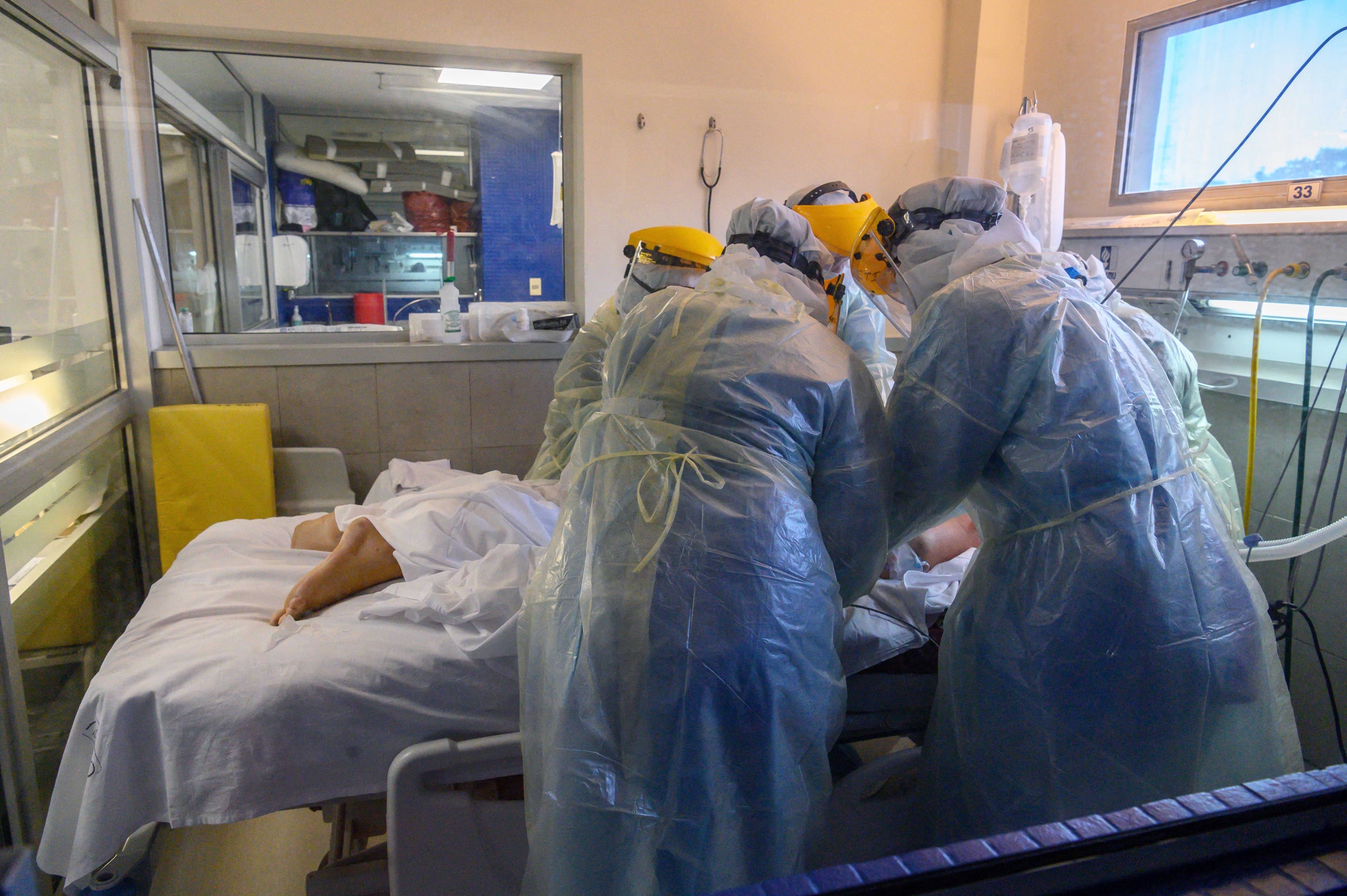
In the previous week, nevertheless, brand-new infections and deaths have actually dropped, thanks to the nation’s swift vaccine roll-out, states Radi– promising that the nation can control the infection again.
Early success
Uruguayan researchers and agents associated the nation’s early success at keeping the pandemic in check to federal government authorities following the suggestions of the Honorary Scientific Advisory Group (GACH), a group of 55 multidisciplinary science specialists led by Radi. In March 2020, after the nation verified its very first COVID-19 cases, the federal government quickly closed down services and schools, and limited travel at its borders, on the basis of the group’s suggestions.
” We got numerous things right,” states Radi. “The coupling of health, science, federal government and society in 2020 was nearly best.”
At the very same time, researchers– consisting of Gonzalo Moratorio, a virologist at the Pasteur Institute and the University of the Republic, both in Montevideo– understood that Uruguay would require COVID-19 tests to determine and after that separate individuals who are contaminated, which the nation could not count on buying those packages from other countries. The scientists established their own, and ultimately accomplished one of the greatest screening rates per capita in Latin America– 2nd just to Chile. Thanks to extensive screening, and an aggressive contact-tracing system put in location by Uruguay’s Ministry of Health, the nation had the ability to break transmission chains prior to they might grow significantly. On numerous events in 2020, Uruguay reported no brand-new day-to-day infections.
However all of that altered in2021 COVID-19 cases started climbing up in December. The GACH as soon as again suggested limitations, such as border closings, however federal government authorities did not execute all of them. They did not close dining establishments since it would have hurt the economy, states Radi.
As the variety of infections continued to grow, Uruguay’s test, trace, isolate (Tetris) program failed. Again than 4%of tests return favorable, states Moratorio, Tetris can not recognize and separate COVID-19 cases rapidly enough to consist of the infection.
” This actually relentless very first wave we are suffering is method beyond the Tetris method,” states Radi. “We have actually misplaced a big percentage of cases.”
Stuck in the middle
Another factor for Uruguay’s current spike is the nation’s location, scientists state.
Although COVID-19 has actually declined in some parts of the world, it is raving in South America. The continent is presently reporting the 5 greatest rates of weekly COVID-19 deaths per capita worldwide.
Uruguay is wedged in between 2 of the area’s hotspots– Argentina and Brazil– where infections have actually been driven in part by an extremely transmissible variation of SARS-CoV-2 called P. 1, or Gamma. Some Uruguayan cities, such as Rivera, press versus the border with Brazil, making travel limitations in between the nations inefficient there.
In February, less than 15%of all infections sequenced in Uruguay were the Gamma version– however in Rivera, that figure stood at 80%, states Rodney Colina, head of the molecular-virology lab at the University of the Republic in Salto, Uruguay.
Leak of the Gamma version into Uruguay was particularly bad throughout the summertime vacations, held early in the year, when friends and family came together instead of remaining socially distanced. Researchers now discover the variation in 9 of every 10 sequenced infection samples across the country, states Radi.
Relaxed alertness
However the Gamma variation is just one part of the formula, Uruguay’s researchers state. Paradoxically, the nation’s early success in consisting of the pandemic most likely played a part in the loss of control in 2021.
” National authorities declared triumph too early,” states Moratorio. “Worry of the infection was lost due to the fact that of all the advantages we had actually done in the past.”
When case numbers rose, Uruguay ought to have locked down to bring them back to workable levels, states Zaida Arteta, secretary of the Medical Union of Uruguay and a member of the Uruguayan Interdisciplinary COVID-19 Data Analysis Group, which keeps an eye on the pandemic.
” We had a number of chances to return on track with our epidemiological tracing, however rather we continued opening and moved from a technique of containment to mitigation,” she states.
The workplace of the Uruguayan president and the Ministry of Public Health did not react to Nature‘s questions about why they selected to not follow the GACH’s suggestions to enact constraints the 2nd time around.
Federal government authorities weren’t the only ones to let their guard down when it pertained to COVID-19 Scientists state that compliance with social-distancing suggestions subsided in 2021 due to the fact that individuals of Uruguay were positive in how the pandemic had actually been handled, and in the COVID-19 vaccines. The very first shots were administered in Uruguay on 1 March.
Research Study released by the GACH that month discovered that, although most of Uruguayans believe that COVID-19 is a serious illness, just one in 3 believed they themselves would get contaminated within the next 6 months.
” Though infections were increasing, there was a basic sense that things were under control or improving,” states Radi. “In reality, they were worsening.”
Up until now, about 43%of Uruguayans have actually been totally immunized, and 63%have actually gotten a minimum of one dosage of a COVID-19 vaccine. The nation has the second-fastest vaccination program in South America, and on 9 June started administering jabs to individuals aged 12 to 17.
Favorable COVID-19 cases have actually reduced by more than one-third in the previous week. For those who have actually been immunized, admissions to intensive-care systems have actually visited more than 92%, and deaths have actually dropped by more than 95%, according to a research study by Uruguay’s Ministry of Public Health.
So specialists stay meticulously confident. “It’s not over yet, we still have lots of major cases and anticipate more deaths,” states Arteta. “However the vaccine roll-out is among Uruguay’s strengths. They are effective, and we are immunizing extremely well and rapidly. I hope the pattern continues.”
This short article is recreated with consent and was very first released on June 25 2021.


No comments:
Post a Comment